91ÖÆÆ¬³§

Alternative Approaches

Here, we explore non-traditional approaches to education, such as Montessori, Waldorf, Reggio Emilia, and progressive schools. This subheading delves into the philosophies, teaching methods, and learning environments of these alternative models, helping parents understand their distinctive characteristics and potential benefits.

View the most popular articles in Alternative Approaches:

The Rise of Micro-Schools Within 91ÖÆÆ¬³§ Networks

Updated
|
The Rise of Micro-Schools Within 91ÖÆÆ¬³§ Networks
Explore how private school networks are adopting micro-schools to deliver flexible, personalized, and innovation-driven education in 2026.

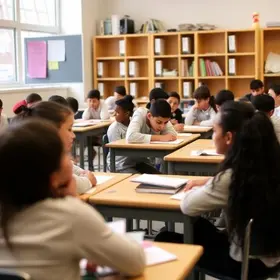
Micro-schools are rapidly becoming one of the most talked-about developments in private education. Once viewed as niche alternatives to traditional classrooms, micro-schools are now increasingly being adopted by established private school networks seeking to provide more personalized, flexible, and innovation-focused learning environments.

In 2026, many independent schools are experimenting with smaller satellite campuses, hybrid learning hubs, and highly customized instructional models designed to meet changing family expectations. The rise of micro-schools reflects broader shifts in education, including growing demand for individualized instruction, flexible scheduling, and student-centered learning.

For private school networks, micro-schools offer opportunities to expand access, test new educational approaches, and serve families seeking alternatives to conventional large-campus experiences.

What Is a Micro-School?

A micro-school is generally a small learning community that combines elements of traditional schooling, personalized education, and sometimes homeschooling flexibility.

Most micro-schools feature:

  • Small student populations
  • Multi-age classrooms
  • Personalized instruction
  • Project-based learning
  • Flexible scheduling
  • High student-teacher interaction

Unlike traditional private schools that may enroll hundreds or thousands of students, micro-schools often serve anywhere from 10 to 150 students, depending on the model.

Some operate independently, while others are now being launched directly by larger private school organizations.

Why 91ÖÆÆ¬³§ Networks Are Expanding Into Micro-Schools

Several factors are driving private schools to explore micro-school models.

Families Want More Personalized Education

Many parents increasingly seek educational settings where students receive individualized attention and customized academic pathways.

Smaller learning environments may allow schools to:

  • Adapt instruction more quickly
  • Support different learning styles
  • Provide flexible pacing
  • Strengthen student-teacher relationships
  • Reduce classroom distractions

Families interested in personalized
. . .read more

Micro-Schools in 91ÖÆÆ¬³§ Networks

Updated
|
Micro-Schools in 91ÖÆÆ¬³§ Networks
How micro-schools within private school networks are reshaping personalized learning, flexibility and enrollment models in 2026.

The rise of micro-schools within private school networks is one of the most notable structural shifts in K-12 education in 2026. Once considered a niche alternative, micro-schools are now being adopted by established private school systems as a way to offer more personalized, flexible, and scalable learning environments.

For families exploring private education, this trend signals a broader rethinking of how schools deliver instruction. Rather than relying solely on traditional campus models, some private school networks are launching smaller, satellite-style programs designed to meet changing student needs. Parents researching how to choose a private school may increasingly encounter micro-school options alongside conventional campuses.

What Is a Micro-School?

A micro-school is typically a small learning environment, often serving between 10 and 150 students, with an emphasis on personalized instruction, flexible scheduling and multi-age groupings. While early micro-schools often operated independently, a growing number now function within larger private school networks.

These network-affiliated micro-schools benefit from shared resources such as curriculum, teacher training, administrative support and college counseling, while maintaining a smaller, more agile classroom environment.

Organizations like have helped define and expand the model, offering research, training and advocacy for micro-school development. Similarly, innovative networks such as have demonstrated how decentralized learning communities can operate under a shared philosophy while maintaining local autonomy.

Why 91ÖÆÆ¬³§ Networks Are Embracing Micro-Schools

Private school leaders are responding to several converging trends: Demand for personalization, concerns about student well-being,

. . .read more

Alternative Transcript Models in 91ÖÆÆ¬³§s

Updated
|
Alternative Transcript Models in 91ÖÆÆ¬³§s
Explore alternative transcript models, mastery transcripts, and portfolio admissions in private schools and what they mean for college admissions.

Alternative transcript models, mastery transcripts, and portfolio admissions are reshaping how private school students present their academic achievements in 2026. As colleges place increasing value on skills, competencies, and authentic learning, traditional GPA-based transcripts are no longer the only pathway to demonstrate readiness for higher education.

Private schools, known for their flexibility and innovation, are leading this shift. By adopting mastery-based transcripts and portfolio-driven admissions approaches, these institutions aim to provide a more complete and accurate picture of student learning.

This article explains how these models work, why they are gaining traction, and what families should consider when evaluating schools that use them.

What Are Alternative Transcript Models?

Alternative transcript models move beyond conventional letter grades and cumulative GPAs. Instead, they emphasize demonstrated mastery, skills, and real-world application of knowledge.

These models typically include:

  • Competency-based evaluations instead of grades
  • Narrative feedback from teachers
  • Evidence of student work and projects
  • Skills progression across disciplines

The goal is to provide a more comprehensive view of a student’s abilities, rather than a single numerical summary.

This approach aligns with broader shifts in education, including competency-based learning models supported by organizations such as the .

Understanding Mastery Transcripts

Mastery transcripts are a leading form of alternative transcripts. Developed in part by the Mastery Transcript Consortium, they replace traditional course listings and grades with a system that tracks skill development.

Key Features of Mastery Transcripts

  • Skills-based reporting, such as critical thinking or scientific reasoning

  • Levels of mastery, rather than letter grades
  • Digital platforms
. . .read more

Independent School Accreditation Explained

Updated
|
Independent School Accreditation Explained
Learn how independent school accreditation works, why it matters, and what families should look for when evaluating private schools.

Independent school accreditation, explained clearly, is essential for families evaluating private education options in 2026. While private schools are not required to follow the same regulations as public schools, accreditation provides an important layer of accountability, quality assurance, and continuous improvement.

For parents, accreditation signals that a school meets established standards in areas such as curriculum, faculty qualifications, governance, and student outcomes. For schools, it serves as both a benchmark and a roadmap for ongoing development.

This guide explains how independent school accreditation works, who oversees it, and why it should play a central role in your school search.

What Is Independent School Accreditation?

Independent school accreditation is a voluntary process through which private schools undergo evaluation by an external accrediting organization. The goal is to ensure that the school meets specific educational and operational standards.

Accreditation typically involves:

  • A comprehensive self-study conducted by the school
  • A peer review process by educators from other institutions
  • An on-site evaluation visit
  • Ongoing monitoring and periodic re-accreditation

Unlike government regulation, accreditation is conducted by independent agencies. However, many are recognized by national organizations such as the .

For families researching options, accreditation is one of the most reliable indicators of institutional quality. It complements other considerations discussed in 7 Reasons Why 91ÖÆÆ¬³§ May Be The Right Choice.

Who Accredits Independent Schools?

Several regional and national organizations accredit private schools in the United States and internationally. These agencies establish standards and oversee the evaluation process.

Major

. . .read more

2026 91ÖÆÆ¬³§ Tuition Forecast: What Families Should Know

Updated
|
2026 91ÖÆÆ¬³§ Tuition Forecast: What Families Should Know
Private school tuition is rising worldwide. Discover 2026 trends, likely cost increases, and how families can budget before the new term.

2026 Tuition Forecast: What 91ÖÆÆ¬³§ Families Should Know Before the New Term

Private school families across the United States are preparing for another year of rising tuition costs as schools finalize their 2026 budgets. Inflation, staffing pressures, construction projects, and broader economic shifts are prompting many institutions to raise tuition more than in previous years. For parents working hard to plan ahead, understanding the forces behind these increases is essential.

This article outlines the projected 2026 private school tuition trends, what is motivating higher prices, regional patterns, and strategies families can use to manage costs long before invoices arrive.

Current Tuition Levels and What They Reveal About 2026

Private school tuition levels vary widely, yet the national picture shows unmistakable upward movement. Many day schools now range from the low teens to more than forty thousand dollars per year, with elite programs and boarding schools routinely exceeding that range. Families researching current costs can explore detailed national datasets through 91ÖÆÆ¬³§ Review, which offers school-by-school tuition figures and comparisons: privateschoolreview.com/tuition-stats/private-school-cost-by-state

Although 2025 data suggested fairly typical increases, most independent school business officers reported that expenses rose faster than expected. Schools that absorbed some costs in 2024 and 2025 are more likely to incorporate steeper tuition adjustments for 2026.

Projected Increase Range for 2026

Based on current trend patterns, most private schools are expected to raise tuition by 5 to 8 percent for the 2026–27 academic year.

. . .read more

Recent Articles

Homework Policies in 91ÖÆÆ¬³§s: 2026 Guide
Explore how homework policies in private schools are evolving in 2026, including workload trends, wellness initiatives, and parent expectations.
91ÖÆÆ¬³§ Safety Measures in 2026
Explore updated private school safety measures in 2026, including campus security, mental health support, emergency planning, and digital safety.
The Rise of Micro-Schools Within 91ÖÆÆ¬³§ Networks
Explore how private school networks are adopting micro-schools to deliver flexible, personalized, and innovation-driven education in 2026.